JK Rowling's commencement address can be watched, or read, in its entirety at the online site for Harvard Magazine (a good read, by the way). It's worth your time to do so.
Here are some excerpts that I want to make sure I remember, so I'm quoting them here but this is far from her entire speech, and the speech is important -- it's important to read, word by word:
Personal Responsiblity
"There is an expiry date on blaming your parents for steering you in the wrong direction; the moment you are old enough to take the wheel, responsibility lies with you....
"... choose to use your status and influence to raise your voice on behalf of those who have no voice...."
Personal Happiness
"...personal happiness lies in knowing that life is not a check-list of acquisition or achievement. Your qualifications, your CV, are not your life, though you will meet many people of my age and older who confuse the two.
Poverty
"... [Poverty] is not an ennobling experience. Poverty entails fear, and stress, and sometimes depression; it means a thousand petty humiliations and hardships. Climbing out of poverty by your own efforts, that is indeed something on which to pride yourself, but poverty itself is romanticised only by fools.
Failure Can Help You If You Let It
"...Ultimately, we all have to decide for ourselves what constitutes failure, but the world is quite eager to give you a set of criteria if you let it.
"...the benefits of failure? Simply because failure meant a stripping away of the inessential. I stopped pretending to myself that I was anything other than what I was, and began to direct all my energy into finishing the only work that mattered to me.
"Had I really succeeded at anything else, I might never have found the determination to succeed in the one arena I believed I truly belonged. I was set free, because my greatest fear had already been realised, and I was still alive, and I still had a daughter whom I adored, and I had an old typewriter and a big idea. And so rock bottom became the solid foundation on which I rebuilt my life.
"It is impossible to live without failing at something, unless you live so cautiously that you might as well not have lived at all - in which case, you fail by default.
"The knowledge that you have emerged wiser and stronger from setbacks means that you are, ever after, secure in your ability to survive.
Imagination Is a Responsiblity
"Unlike any other creature on this planet, humans can learn and understand, without having experienced. They can think themselves into other people’s minds, imagine themselves into other people’s places. Of course, this is a power, like my brand of fictional magic, that is morally neutral. One might use such an ability to manipulate, or control, just as much as to understand or sympathise.
"And many prefer not to exercise their imaginations at all. ...I think the wilfully unimaginative see more monsters. They are often more afraid.
"...What is more, those who choose not to empathise may enable real monsters. For without ever committing an act of outright evil ourselves, we collude with it, through our own apathy.
"...Greek author Plutarch: What we achieve inwardly will change outer reality.
May 19, 2008
Amazon Publishing Great 4 Writers?
Forbe's Sramana Mitra has some very interesting perspectives on Amazon.com's potential to help authors in the long run.
Mitra points out such things as:
Currently, book at $24.95, author receives around $1 -1.50 per book. If Amazon is acting as retailer, marketer, publisher and agent, taking 65% of the book, then author would get 35%.
Same book at $24.95: author gets $8.73 per book.
Lots of discussion of Amazon looking at vertical integration, pointing to BookSurge (see post over at Writer/Lawyer for more on that deal) ...
...best news from her article (emphasis added):
"Over the next few years, Amazon likely will use its power to build direct relationships with authors and gradually phase out publishers and agents. It will first go after the independent print-on-demand self-publishers and get the best authors from that world. Amazon will then take on the large publishers."
Makes that Amazon self-publishing company even more interesting to ponder ....
Mitra points out such things as:
Currently, book at $24.95, author receives around $1 -1.50 per book. If Amazon is acting as retailer, marketer, publisher and agent, taking 65% of the book, then author would get 35%.
Same book at $24.95: author gets $8.73 per book.
Lots of discussion of Amazon looking at vertical integration, pointing to BookSurge (see post over at Writer/Lawyer for more on that deal) ...
...best news from her article (emphasis added):
"Over the next few years, Amazon likely will use its power to build direct relationships with authors and gradually phase out publishers and agents. It will first go after the independent print-on-demand self-publishers and get the best authors from that world. Amazon will then take on the large publishers."
Makes that Amazon self-publishing company even more interesting to ponder ....
May 16, 2008
Edgar Allen Poe Awards - 2008
The Mystery Writers of America announced the 2008 winners of their Edgar awards -- here's the list of nominees with the winner appearing first, in boldface type.
Best Mystery Novel
* Down River by John Hart
• Christine Falls by Benjamin Black
• Priest by Ken Bruen
• The Yiddish Policemen’s Union by Michael Chabon
• Soul Patch by Reed Farrel Coleman
Best First Novel by an American Author
* In the Woods by Tana French
• Missing Witness by Gordon Campbell
• Snitch Jacket by Christopher Goffard
• Head Games by Craig McDonald
• Pyres by Derek Nikitas
Best Paperback Original
* Queenpin by Megan Abbott
• Blood of Paradise by David Corbett
• Cruel Poetry by Vicki Hendricks
• Robbie’s Wife by Russell Hill
• Who Is Conrad Hirst? by Kevin Wignall
Best Fact Crime
* Reclaiming History: The Assassination of President John F. Kennedy by Vincent Bugliosi
• The Birthday Party by Stanley Alpert
• Chasing Justice: My Story of Freeing Myself After Two Decades on Death Row for a Crime I Didn't Commit by Kerry Max Cook
• Relentless Pursuit: A True Story of Family, Murder and the Prosecutor Who Wouldn't Quit by Kevin Flynn
• Sacco & Vanzetti: The Men, The Murders, and the Judgment of Mankind by Bruce Watson
Best Mystery Novel
* Down River by John Hart
• Christine Falls by Benjamin Black
• Priest by Ken Bruen
• The Yiddish Policemen’s Union by Michael Chabon
• Soul Patch by Reed Farrel Coleman
Best First Novel by an American Author
* In the Woods by Tana French
• Missing Witness by Gordon Campbell
• Snitch Jacket by Christopher Goffard
• Head Games by Craig McDonald
• Pyres by Derek Nikitas
Best Paperback Original
* Queenpin by Megan Abbott
• Blood of Paradise by David Corbett
• Cruel Poetry by Vicki Hendricks
• Robbie’s Wife by Russell Hill
• Who Is Conrad Hirst? by Kevin Wignall
Best Fact Crime
* Reclaiming History: The Assassination of President John F. Kennedy by Vincent Bugliosi
• The Birthday Party by Stanley Alpert
• Chasing Justice: My Story of Freeing Myself After Two Decades on Death Row for a Crime I Didn't Commit by Kerry Max Cook
• Relentless Pursuit: A True Story of Family, Murder and the Prosecutor Who Wouldn't Quit by Kevin Flynn
• Sacco & Vanzetti: The Men, The Murders, and the Judgment of Mankind by Bruce Watson
January 15, 2007
Moleskines
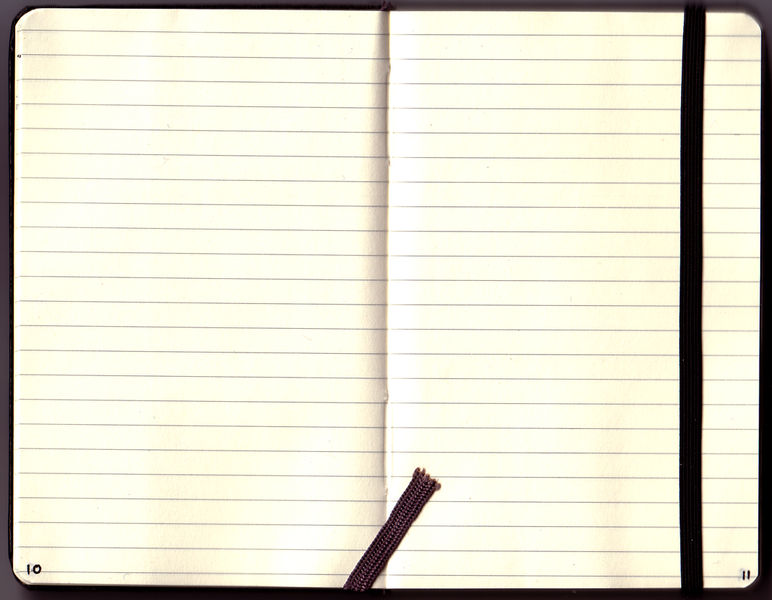 Moleskines - if you're a writer, you gotta have one. According to moleskines.com, a moleskine "is the legendary notebook, used by European artists and thinkers for the past two centuries, from Van Gogh to Picasso, from Ernest Hemingway to Bruce Chatwin." (Yes, I agree - I never thought of Hemingway as a European artist....)
Wikipedia has a nice history of the notebook, which is currently manufactered in Italy by Modo & Modo since the original manufacturer, Tours, went out of business in 1986.
From the Modo & Modo site, "...in Ernest Hemingway's memoir, Moveable Feast, he chronicles Paris in the 1920s just after World War I while spending time writing in various Paris cafés. Hemingway reflects on the quintessential moments ordering a cafe au lait and pulling out his notebook and pencil from his pocket to start writing. It is this simple ritual that he describes so well. That comfortable feeling, when even in the mist of a bustling café that one can immerse oneself into thoughtful prose or a delicate sketch. During this time in Paris, Hemingway apparently had also been working on The Sun Also Rises using his trusted Moleskine. Not a surprising notion to those that have come to know and love Moleskine."
For how people are using their moleskines, check out Moleskinerie.com.
How to Write A Book Proposal - 2 (the Platform)
A relatively new publishing concept is the writer's platform. Publishers are looking for writers who have established outlets to promote the book they've written: this can be a website, a newsletter, or a known reputation in their community outside of being a writer. Other examples include writing a syndicated column, giving speeches, being a well-known blogger, and hosting or regularly appearing as an expert on a local radio show. Synergy is the industry word used to describe how this platform works together with other marketing avenues to promote the book.
Writers are responsible for their platform: it's one more thing to build alongside that book proposal. According to Scott Mendel, your book proposal is premature if your platform isn't ready to go. Mendel advises:
"If your description of your platform strikes even you as slight, this is probably a sign that you have put the cart before the horse. In this case you should spend more time and resources building your platform before circulating your book proposal for the simple reason that, even if an editor falls in love with your book and convinces her colleagues to publish it, the most likely scenario for your book would be a small advance, and a quiet launch with very modest resources for promotion and publicity, resulting in part in unimpressive sales. Such mediocre or poor sales will be an albatross around your neck the next time you want to circulate a book proposal for another book. They will deflate the perceived value of your future projects, and could trap you as a so-called mid-list author when what you may want to be is a front-list bestseller. Unfair? Maybe. But today’s market-driven nonfiction publishing is driven by sales and inventory numbers available to almost everyone in the book business."
One example of a platform? Read Jenna Glatzer's story of building AbsoluteWrite.com and how it helped her reach #4 on the Amazon.com charts. Another platform? Attorney/blogger Glenn Greenwald hit #1 on Amazon.com after he posted about his new book on his blog, Unclaimed Territory.
Sources: www.wordsmitten.com (interview with Katherine Sands); www.forewordmagazine.com (article by Patti Dickenson); www.backspace.org (article by Scott Mendel); ChurchoftheCustomer (post, 10 Things About Writing Your First Business Book by Ben McConnell and Jackie Huba); Seth Godin's 19 Tips for Authors.
Writers are responsible for their platform: it's one more thing to build alongside that book proposal. According to Scott Mendel, your book proposal is premature if your platform isn't ready to go. Mendel advises:
"If your description of your platform strikes even you as slight, this is probably a sign that you have put the cart before the horse. In this case you should spend more time and resources building your platform before circulating your book proposal for the simple reason that, even if an editor falls in love with your book and convinces her colleagues to publish it, the most likely scenario for your book would be a small advance, and a quiet launch with very modest resources for promotion and publicity, resulting in part in unimpressive sales. Such mediocre or poor sales will be an albatross around your neck the next time you want to circulate a book proposal for another book. They will deflate the perceived value of your future projects, and could trap you as a so-called mid-list author when what you may want to be is a front-list bestseller. Unfair? Maybe. But today’s market-driven nonfiction publishing is driven by sales and inventory numbers available to almost everyone in the book business."
One example of a platform? Read Jenna Glatzer's story of building AbsoluteWrite.com and how it helped her reach #4 on the Amazon.com charts. Another platform? Attorney/blogger Glenn Greenwald hit #1 on Amazon.com after he posted about his new book on his blog, Unclaimed Territory.
Sources: www.wordsmitten.com (interview with Katherine Sands); www.forewordmagazine.com (article by Patti Dickenson); www.backspace.org (article by Scott Mendel); ChurchoftheCustomer (post, 10 Things About Writing Your First Business Book by Ben McConnell and Jackie Huba); Seth Godin's 19 Tips for Authors.
December 25, 2006
BestSeller Lists-1: Accuracy
The New York Times Best Seller List is perhaps the most famous and coveted bestseller list, and some claim that most buyers check this list before making a purchase. [I doubt this, as do others - see below.]
How this list is compiled is a trade secret, but it's known that the NYT "News Surveys" department creates it and the NYT Book Review publishes it.
It's a weekly list, said to be based upon weekly sales reports from a selected set of independent and chain bookstores - and wholesalers - across the country. The sales tallies are not wholesale figures: they represent actual books sold to the individual buyer.
There are other bestseller lists, of course. USA Today has a well-known list: providing the top 150 in book sales without categorization, it gives other information, including the week of peak sales and number of weeks on the list.
Publisher's Weekly has its list. So do various booksellers: for independents, check out BookSense; for chains, look to Barnes&Noble.com, and Borders, which is "teamed" online with Amazon.com. The Christian Booksellers Association also has its own list.
Once you've found the lists, the question becomes: what do they tell you? On his blog From Where I Sit (12-22-06 entry), ThomasNelson CEO Michael Hyatt tells you: not much. The lists don't include things like Wal-Mart sales, and the bulk of the Christian market, for example.
Hyatt explains: "Most of the bestsellers lists are inaccurate. In fact, I can't think of a single exception. They claim to be comprehensive. Supposedly, they represent the best selling books in the country. But the fact is, they don’t. At best, they represent sales through a specific sales channel. But guess what’s missing? That’s right. All the mass market outlets like Wal-Mart, K-Mart, Target, Costco, and Sam’s and Christian bookstores (some 2,300 stores or so). This is a big piece of the market.
"For example, at Thomas Nelson, about 34% of our total sales come from Christian bookstores and another 16% come from mass outlets. Only 21% of our sales go through general market bookstores like Barnes & Noble, Borders, and Books-a-Million—the stores the New York Times polls. The other large Christian publishers probably have a similar mix. As a result, the Times completely misses the number of units that are moving through some very significant sales channels. At best, they can claim that their bestsellers list represents sales through only one specific sales channel.
"...The best solution of all would be for Nielsen’s BookScan to collect data from Christian bookstores. It already collects data from 6,500 general market bookstores and other retail outlets, including Target, K-Mart, and Costco. (It apparently does not collect data from Wal-Mart or Sam’s.) It is also based on point-of-sale data, so the data is thus more reliable. It reflects what customers are actually buying."
PoynterOnline's BookBabes blog (11-19-04 entry) has a nice discussion of an article written in Fall 2004 by Marina Krakovsky which appeared in The Washington Post Book World.
Krakovsky's interest was piqued by a study by Stanford business professor Alan Sorensen, who had compared the NYT List with Nielsen BookScan. (Nielsen more accurate, NYT didn't impact booksales in any significant way.) Krakovsky investigated how various bestseller lists are compiled, comparing them to the Nielsen BookScan, which purportedly logs approximately 70 percent of all book sales.
Margo Hammond, book editor for the St. Petersburg Times writes, "So which bestseller list really tells us which books America is buying? It would seem none of them. Even [Nielsen] BookScan can't convince Wal-Mart to disclose its sales, for example. BookScan may provide the most accurate list for the whole country. But for now the public buys into the more "whimsical" lists because they carry some sort of branding allure, without thinking about how these lists reflect the tastes and philosophies of each publication as much as they do actual sales. Instead of bestseller lists, perhaps we should call them Lists of Books We Think Our Particular Readers Are Buying."
Ellen Heltzel, co-author of the BookBabes column for Poytner, replies: "Beware the big clomping feet of BookScan. Sure, the data-meister doesn't clock Wal-Mart, nor, for that matter, does it measure sales to libraries or assigned reading on college campuses. But, in the four years since it was started, BookScan has turned itself into a force to reckon with. Where newspapers and magazines used to offer the best that was available in customer advisories on what was selling, now BookScan can do it better. Cultural lag and tradition accounts for why the reading public is still addicted to The New York Times bestseller list. But BookScan's Jim King makes it clear that his outfit would like to become the standard inside the industry -- and outside, as well.
BookScan's advantage is that all it does is collect the numbers that reveal winners and losers (as far as sales go, anyway). It surveys national chains, regional chains, discounters like Costco, and independents. The information is helpful to publishers, who now can make decisions based not only on how their own books are doing, but with fair measure of the competition."
In 2003, Publisher's Weekly wasn't so sure about this new kid on the block. "So how representative are the service's numbers? An informal survey of the top-selling books of 2003 showed some surprising things.
"BookScan generally claims to represent between 70% and 75% of sales in the industry (Wal-Mart and some of the supermarket chains are among those who decline to report.) But a comparison with in-print figures supplied by publishers reveals that the numbers are more likely to represent about 65%, even after deducting for unsold books and returns.
"For BookScan's top ten nonfiction titles published last year--a list that include mass-market favorites like Phil McGraw's diet books as well as indie hits like Benjamin Franklin: An American Life--no title had BookScan sales comprise more than 75% of total sales. For some of the books that had strong special-sales, they ran as low as 25%."
[Note: if you want to check the sales of a particular book (e.g., if you want to confirm the accuracy of your royalty check), you can buy a sales report based upon Nielsen BookScan information from the BookStandard. An example of what you get for $85 is shown on the site in .pdf format.]
How this list is compiled is a trade secret, but it's known that the NYT "News Surveys" department creates it and the NYT Book Review publishes it.
It's a weekly list, said to be based upon weekly sales reports from a selected set of independent and chain bookstores - and wholesalers - across the country. The sales tallies are not wholesale figures: they represent actual books sold to the individual buyer.
There are other bestseller lists, of course. USA Today has a well-known list: providing the top 150 in book sales without categorization, it gives other information, including the week of peak sales and number of weeks on the list.
Publisher's Weekly has its list. So do various booksellers: for independents, check out BookSense; for chains, look to Barnes&Noble.com, and Borders, which is "teamed" online with Amazon.com. The Christian Booksellers Association also has its own list.
Once you've found the lists, the question becomes: what do they tell you? On his blog From Where I Sit (12-22-06 entry), ThomasNelson CEO Michael Hyatt tells you: not much. The lists don't include things like Wal-Mart sales, and the bulk of the Christian market, for example.
Hyatt explains: "Most of the bestsellers lists are inaccurate. In fact, I can't think of a single exception. They claim to be comprehensive. Supposedly, they represent the best selling books in the country. But the fact is, they don’t. At best, they represent sales through a specific sales channel. But guess what’s missing? That’s right. All the mass market outlets like Wal-Mart, K-Mart, Target, Costco, and Sam’s and Christian bookstores (some 2,300 stores or so). This is a big piece of the market.
"For example, at Thomas Nelson, about 34% of our total sales come from Christian bookstores and another 16% come from mass outlets. Only 21% of our sales go through general market bookstores like Barnes & Noble, Borders, and Books-a-Million—the stores the New York Times polls. The other large Christian publishers probably have a similar mix. As a result, the Times completely misses the number of units that are moving through some very significant sales channels. At best, they can claim that their bestsellers list represents sales through only one specific sales channel.
"...The best solution of all would be for Nielsen’s BookScan to collect data from Christian bookstores. It already collects data from 6,500 general market bookstores and other retail outlets, including Target, K-Mart, and Costco. (It apparently does not collect data from Wal-Mart or Sam’s.) It is also based on point-of-sale data, so the data is thus more reliable. It reflects what customers are actually buying."
PoynterOnline's BookBabes blog (11-19-04 entry) has a nice discussion of an article written in Fall 2004 by Marina Krakovsky which appeared in The Washington Post Book World.
Krakovsky's interest was piqued by a study by Stanford business professor Alan Sorensen, who had compared the NYT List with Nielsen BookScan. (Nielsen more accurate, NYT didn't impact booksales in any significant way.) Krakovsky investigated how various bestseller lists are compiled, comparing them to the Nielsen BookScan, which purportedly logs approximately 70 percent of all book sales.
Margo Hammond, book editor for the St. Petersburg Times writes, "So which bestseller list really tells us which books America is buying? It would seem none of them. Even [Nielsen] BookScan can't convince Wal-Mart to disclose its sales, for example. BookScan may provide the most accurate list for the whole country. But for now the public buys into the more "whimsical" lists because they carry some sort of branding allure, without thinking about how these lists reflect the tastes and philosophies of each publication as much as they do actual sales. Instead of bestseller lists, perhaps we should call them Lists of Books We Think Our Particular Readers Are Buying."
Ellen Heltzel, co-author of the BookBabes column for Poytner, replies: "Beware the big clomping feet of BookScan. Sure, the data-meister doesn't clock Wal-Mart, nor, for that matter, does it measure sales to libraries or assigned reading on college campuses. But, in the four years since it was started, BookScan has turned itself into a force to reckon with. Where newspapers and magazines used to offer the best that was available in customer advisories on what was selling, now BookScan can do it better. Cultural lag and tradition accounts for why the reading public is still addicted to The New York Times bestseller list. But BookScan's Jim King makes it clear that his outfit would like to become the standard inside the industry -- and outside, as well.
BookScan's advantage is that all it does is collect the numbers that reveal winners and losers (as far as sales go, anyway). It surveys national chains, regional chains, discounters like Costco, and independents. The information is helpful to publishers, who now can make decisions based not only on how their own books are doing, but with fair measure of the competition."
In 2003, Publisher's Weekly wasn't so sure about this new kid on the block. "So how representative are the service's numbers? An informal survey of the top-selling books of 2003 showed some surprising things.
"BookScan generally claims to represent between 70% and 75% of sales in the industry (Wal-Mart and some of the supermarket chains are among those who decline to report.) But a comparison with in-print figures supplied by publishers reveals that the numbers are more likely to represent about 65%, even after deducting for unsold books and returns.
"For BookScan's top ten nonfiction titles published last year--a list that include mass-market favorites like Phil McGraw's diet books as well as indie hits like Benjamin Franklin: An American Life--no title had BookScan sales comprise more than 75% of total sales. For some of the books that had strong special-sales, they ran as low as 25%."
[Note: if you want to check the sales of a particular book (e.g., if you want to confirm the accuracy of your royalty check), you can buy a sales report based upon Nielsen BookScan information from the BookStandard. An example of what you get for $85 is shown on the site in .pdf format.]
December 22, 2006
How to Write A Book Proposal - 1 (the CEO)
Written by the Pres/CEO of ThomasNelson (6th largest trade publisher in the US, 2006), this is a nice article both in size (10 pages) and in example (lots of illustrations of what he likes to see).
What does Michael Hyatt want to see? Five things:
1. captivating cover letter;
2. title page;
3. proposal overview (the content, the market, and the author);
4. chapter-by-chapter synopsis; and
5. two sample chapters.
What does Michael Hyatt advise? Two things:
1. Decide what you want to say; and
2. Decide to whom you want to say it.
Lots more in this downloadable article (pdf format). A must read.
Mr. Hyatt has a very nice blog, too, entitled, "From Where I Sit: Musings on the World of Publishing."
What does Michael Hyatt want to see? Five things:
1. captivating cover letter;
2. title page;
3. proposal overview (the content, the market, and the author);
4. chapter-by-chapter synopsis; and
5. two sample chapters.
What does Michael Hyatt advise? Two things:
1. Decide what you want to say; and
2. Decide to whom you want to say it.
Lots more in this downloadable article (pdf format). A must read.
Mr. Hyatt has a very nice blog, too, entitled, "From Where I Sit: Musings on the World of Publishing."
November 25, 2006
Grammar-1:11 Common Mistakes
 According to JunketStudies, here are the 11 rules of grammar that are most often broken (or is it "broken most often"?):
1. To join two independent clauses, use a comma followed by a conjunction, a semicolon alone, or a semicolon followed by a sentence modifier.
2. Use commas to bracket nonrestrictive phrases, which are not essential to the sentence's meaning.
3. Do not use commas to bracket phrases that are essential to a sentence's meaning.
4. When beginning a sentence with an introductory phrase or an introductory (dependent) clause, include a comma.
5. To indicate possession, end a singular noun with an apostrophe followed by an "s". Otherwise, the noun's form seems plural.
6. Use proper punctuation to integrate a quotation into a sentence. If the introductory material is an independent clause, add the quotation after a colon. If the introductory material ends in "thinks," "saying," or some other verb indicating expression, use a comma.
7. Make the subject and verb agree with each other, not with a word that comes between them.
8. Be sure that a pronoun, a participial phrase, or an appositive refers clearly to the proper subject.
9. Use parallel construction to make a strong point and create a smooth flow.
10. Use the active voice unless you specifically need to use the passive.
11. Omit unnecessary words.
What does all this MEAN? Go here, and click for details: http://www.junketstudies.com/rulesofw/
How They Do It-2: Robin Lee Hatcher
 Robin Lee Hatcher describes herself as an "intuitive writer," explaining: "I write to discover what will happen next just as my readers read to discover what will happen next. I don't know what will occur in chapter ten until I have written chapter nine."
I've discovered this is how I write fiction, too. So, how to keep the plot organized when you're not working from an outline?
Robin's way:
"I keep what is called a "rolling plot" notebook. Basically, I journal before beginning to write for that day, determining, based on what I wrote yesterday, what needs to be accomplished next. Sometimes, of course, I write down what needs to happen in the future. I keep an 8.5" x 5.5" spiral notebook for each book, and some pages are flagged and highlighted as I go along, knowing I will have to backtrack to some of my comments."
For software help, Robin's recommendation - coming by way of author James Scott Bell: Inspiration8. "I've used it now on two projects, and I highly recommend it as a way to get the juices flowing." A free version is available at http://www.inspiration.com/productinfo/Inspiration/index.cfm.
Robin Lee Hatcher has written over 50 novels, and includes among her accolades:
winner of the Christy Award for Excellence in Christian Fiction (Whispers from Yesterday), the RITA Award for Best Inspirational Romance (Patterns of Love and The Shepherd's Voice), and the RWA Lifetime Achievement Award. Catching Katie (Tyndale) was named one of the Best Books of 2004 by the Library Journal.
For all of Robin's article, see: http://charisconnection.blogspot.com/2006/11/rlh-brainstorming-and-intuitive-writer.html
For Robin's writing blog, go to: http://robinlee.typepad.com/i_was_just_thinking_/
November 24, 2006
Elements of a Thriller-2: Thriller Sub-genres
 My research is revealing a lot of controversy concerning what is, and what is not, a thriller. Is Capote's In Cold Blood a thriller? There's a debate for you.
 Reader's Digest would take the affirmative side of that argument, as the RD editorial board has attempted to categorize a wide variety of books as "thrillers" in their list of "the world's best thrillers," organized by RD's definition of the most popular thriller sub-genres, commentary below provided by RD Special Editions editor Laura Kelly:
1. The Spy Thriller
The Spy Who Came In from the Cold by John le Carré (1963) is the quintessential espionage thriller. Set during the Cold War, this rich tale still captivates with its spellbinding portrayal of the world of secret agents. And don't miss The Avenger by Frederick Forsyth (2003) the 21st century's top spy pulse-pounder, by the author of The Day of the Jackal.
2. The Techno Thriller
Gadgets, gadgets and more gadgets. Ian Fleming started it all with James Bond and his arsenal of clever, useful gadgets, some not so far-fetched anymore. The best Bond book? From Russia with Love (1957). Get to know the real Bond, not Sean, Roger, Timothy or Pierce, by imbibing him on the printed page. For a more recent techno thriller, The Blue Nowhere by Jeffery Deaver (2001) stimulates the imagination with its truly surprising twists and turns, and a fascinating computer-based plot.
3. The Classic Thriller
The War of the Worlds by H. G. Wells (1898) was one of the world's pioneering thrillers, introducing this genre, unknown at the time, to worldwide acclaim. And the story is still alive and well today. We agree: Tom Cruise is cute, but treat yourself to the real deal and snatch up the book. For a more recent classic thriller, try Whiteout by Ken Follett (2004), the latest gem by the author of Eye of the Needle. It's the chilling story of what happens when biological weapons fall into the wrong hands, and the blizzard that builds over the course of the book will cool you right off at the beach.
4. The Psychological Suspense Thriller
If you get your adrenaline rush from mind games rather than chase scenes, psychological suspense is for you. For sheer creepiness and terror, nothing beats The Silence of the Lambs by Thomas Harris (1988). More recently, Shutter Island by Dennis Lehane (2003), will not only scare you silly but fool you as well.
5. The Legal Thriller
Presumed Innocent by Scott Turow (1987) features terrific characters, a deftly executed plot, and fascinating legal insight, making it the definitive legal thriller. And for an exciting new author, don't miss In the Shadow of the Law by Kermit Roosevelt (2005), a firecracker of a debut by a former clerk for U.S. Supreme Court Justice David Souter.
6. The Medical Thriller
Medical paperwork these days is pretty terrifying, but you can get true terror in these two great medical thrillers. Read Coma by Robin Cook (1977), the unforgettable saga of patients who check into the hospital for "minor" surgery and never wake up. For the strong of stomach, The Surgeon by Tess Gerritsen (2001) is gruesomely chilling and addictively page-turning.
7. The Sci-Fi Thriller
Sure he's done dinosaurs and television emergency rooms, but Michael Crichton's first novel, The Andromeda Strain (1969), still ranks as one of the top science fiction thrillers of all time. What could be scarier than microscopic killer germs run amok? Representing the larger end of the weird-creature spectrum, Mammoth by John Varley (2005) imaginatively spins a yarn starring a billionaire, a brilliant nerd, and a gifted animal wrangler whose newest charge happens to be a woolly mammoth.
8. The Military Thriller
You've seen the movie, but don't miss the book. The Great Escape by Paul Brickhill (1950) is even more captivating on paper, with perhaps the most hair-raising POW escape scene ever written. Remembering that this novel is based on a true story renders it doubly nerve-racking. For contemporary military thrillers, nothing beats the Jack Reacher series by Lee Child. Try the first Reacher novel, Killing Floor (1997) or Child's latest bestseller, One Shot (2005). Or, for that matter, pick up any riveting Reacher book in between.
9. The True-Crime Thriller
Yes, real life can be stranger than fiction, and true-crime thrillers prove this. The most famous book in this nonfiction genre is Truman Capote's In Cold Blood (1966). The author spent months in the Midwest painstakingly retracing the steps of two young rural killers -- and then wrote about it chillingly. Another excellent and more recent true-crime book is Green River, Running Red by Ann Rule (2004), the true story of the notorious Green River serial killer who terrorized the Seattle area for decades.
10. The Action/Adventure Thriller
Alive: The Story of the Andes Survivors by Piers Paul Read (1974) set the gold standard for heroic survival stories, with this true tale of a Uruguayan rugby team whose plane crashes, resulting in an incredible 10-week physical and emotional ordeal. Changing altitudes from mountains to the ocean floor, Shadow Divers, the hit 2005 book by Robert Kurson, re-enacts the story of an extraordinary deep-sea discovery and adventure.
Subscribe to:
Posts (Atom)